
 More charts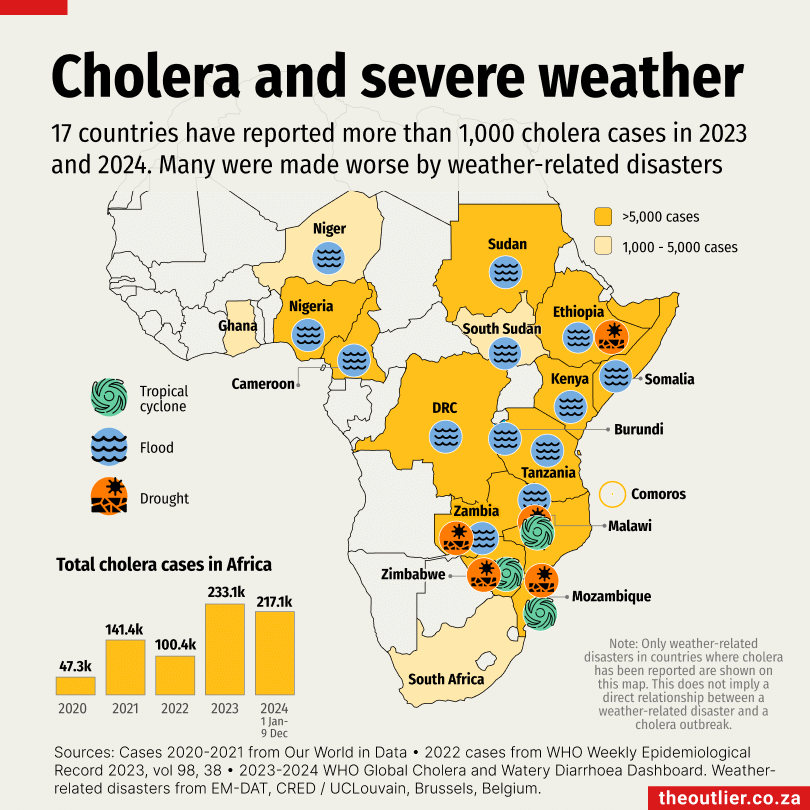
Seventeen African countries reported over 1,000 cholera cases each in 2023 and 2024, with many outbreaks linked to or worsened by severe weather events. Floods, droughts and cyclones damage infrastructure, contaminate water sources and reduce access to clean drinking water, creating ideal conditions for cholera to spread.
Malawi had its worst cholera outbreak on record, reporting more than 41,000 cases and 1,000 cholera-related deaths in 2023 and 2024 alone. Its latest outbreaks can be traced to a series of cyclones starting in late 2021.
Cyclones and heavy rains also exacerbated an outbreak in Mozambique, while in Zambia and Zimbabwe, the spread of cholera was driven by drought and floods.
In the DRC, conflict and floods force people into overcrowded camps with poor sanitation. Ethiopia, Sudan and Somalia face similar challenges due to internal displacement.
As climate conditions shift, experts have called for the strengthening of infrastructure and health systems to combat the spread of waterborne diseases such as cholera.